The Ultimate Guide to Visiting One Pillar Pagoda (Chua Mot Cot)
Thứ sáu, Ngày 26/06/2026 11:29
If you are planning a Hanoi city tour, the One Pillar Pagoda (known locally as Chua Mot Cot) is an absolute must-visit destination. Standing alongside the Ho Chi Minh Mausoleum and the Temple of Literature, this ancient structure is not just a famous tourist attraction, but also a sacred Buddhist temple and an official symbol of Hanoi.
In this comprehensive guide, we will explore the rich history, unique architecture, and essential travel tips for visiting this historic site in Vietnam's capital.
The Fascinating History of One Pillar Pagoda
The origins of the pagoda date back to the 11th century during the Ly Dynasty, under the reign of Emperor Ly Thai Tong. According to ancient royal chronicles, the monument was born from a divine legend.
The emperor, who was childless, had a holy dream in 1049. In the dream, Avalokiteshvara (the Bodhisattva of Mercy, or Quan Am) appeared seated on a giant lotus flower and handed him a baby boy. Soon after, the empress gave birth to a prince.
To express his profound gratitude, the emperor ordered the construction of a temple designed to mimic the lotus from his vision. Originally named Dien Huu Pagoda (meaning "long-lasting happiness"), it was built as a place to pray for the longevity of the dynasty.
Over the centuries, the pagoda survived multiple wars but faced near-total destruction in 1954 when retreating French forces blew it up. Recognizing its immense value to Vietnamese culture, the government meticulously rebuilt the architectural monument in 1955 based on original blueprints.
Unique Architecture: A Lotus Blossoming from the Water
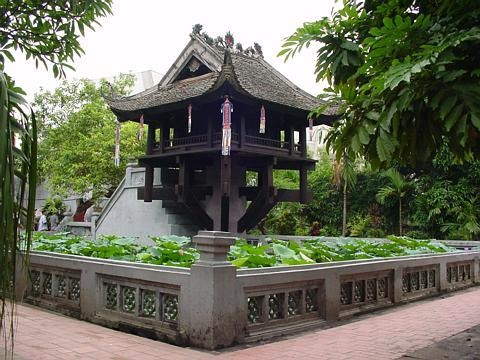
What makes the One Pillar Pagoda architecture world-famous is its extraordinary, gravity-defying design. The entire wooden pavilion is built to resemble a lotus blossom rising straight out of a square pond.
Key architectural features include:
- The Single Pillar: The entire wooden structure rests on a single stone pillar measuring 1.25 meters in diameter and 4 meters in height.
- Linh Chieu Pond: The central pillar is planted firmly in the middle of a beautiful lotus pond, surrounded by brick balustrades.
- The Curved Roof: The temple features a traditional Vietnamese curved roof adorned with majestic dragons, symbolizing power, royalty, and spiritual protection.
Because of this unparalleled design, the Asian Record Organization officially recognized it as the temple with the "most unique architecture in Asia."
Cultural and Spiritual Significance
Today, the pagoda is classified as a national historic heritage site. It remains an active place of worship where locals and international tourists come to burn incense and pray. Because of its origin story, many visitors come specifically to pray for marriage, health, and fertility.
Visitor Guide: Opening Hours and Travel Tips
If you are adding the pagoda to your Hanoi itinerary, here is the essential travel information you need:
- , visitors must wear respectful clothing (shoulders and knees covered).Buddhist temple As this is a sacred Dress code:
- Entrance fee: Free for all visitors.
- One Pillar Pagoda opening hours: Open daily from 7:00 AM to 6:00 PM.
- Location: Right next to the Ho Chi Minh Complex (Ba Dinh District), making it easy to combine with visits to the Ba Dinh Square and Ho Chi Minh Museum.
Reach out Viet Sunshine travel for superior itinerary panning to enhance your appreciation of Hanoi's landscape